
Step past the concrete stairs into the cool shadow of Hato Caves, and suddenly Curaçao’s bright turquoise beach postcard disappears behind silent limestone walls that began growing beneath tropical ocean waves epochs before humans ever crossed the Caribbean. Covering roughly 4,900 square meters (over 52,000 square feet) of dry vaulted halls, mineral water pools, and echoing crevices, Hato ranks as the largest accessible show cave on the island, and its geological story explains how the entire dry northern terrace of Curaçao came to exist above sea level.
Essential Logistics & Takeaways
- Unique Third-Terrace Elevation: Unlike most Curaçao caves sitting on the lower second terrace, Hato Caves lie high along the third coral limestone terrace facing north.
- Show Cave Heritage: Opened formally to public visitors in 1991 after government lighting, ventilation, and handrail construction across 4,900 square meters.
- Signature Formations: Guides spotlight sculpted calcite figures including Mother Maria (Madonna), The Sleeping Giant, Freedom Fountain, and a clear subterranean pool.
- Protected Wildlife Colony: Upper dark recesses shelter harmless long-nosed bats (Leptonycteris) and long-tongued fruit/nectar bats (Glossophaga longirostris) vital to local cactus pollination.
Third-Terrace Coral Limestone Origins
To understand how Hato’s giant chambers formed without nearby rivers or snowy mountain snowmelt, picture Curaçao completely underwater long ago. During warm prehistoric ocean eras, massive coral reefs thrived atop submerged volcanic bedrock, stacking porous skeletons of brain coral, elkhorn, and calcareous marine shells layer upon thick layer over millions of years.
Eventually, shifting tectonic forces uplifted the island gradually above ocean waves in distinct stair-step plateaus known to geologists as coral limestone terraces. Look closely while driving along F.D. Rooseveltweg toward the airport and you can still spot flat raised rock shelves stepped dramatically across the northern horizon. While most smaller coastal grottoes along Curaçao developed along the lower second terrace nearer the ocean, Hato Caves hollowed deep inside the higher third terrace roughly 300,000+ years ago as falling sea levels exposed porous fossilized reef directly to tropical rainfall.
Rainwater absorbing mild carbon dioxide from air and soil turns faintly acidic. Seeping patiently downward through hairline cracks in fossilized coral limestone, slightly acidic rainwater dissolved softer pockets of calcium carbonate over millennia, widening subterranean fissures into cathedral-tall rooms. Look right at the cavern walls during your 45-minute guided walk and you can literally trace fossilized marine coral textures frozen permanently inside solid stone!
Notice what sets this northern plateau apart from coastal cliffs on the south side too. Constant Atlantic-driven trade-wind swells hammer Curaçao’s exposed north coastline day and night, carving undercut sea cliffs below while leaving older uplifted limestone ledges high and dry up on the terrace crest where Hato’s entrance opens.
Stalactites, Stalagmites & Famous Named Silhouettes
Once air filled those dissolved subterranean cavities, dripping mineral water shifted from carving stone away to decorating it slowly downward and upward. Each water droplet creeping through the terrace ceiling carries dissolved calcite. Pausing at the roof tip before falling, each drop releases carbon dioxide gas and leaves behind a microscopic ring of mineral crystal.
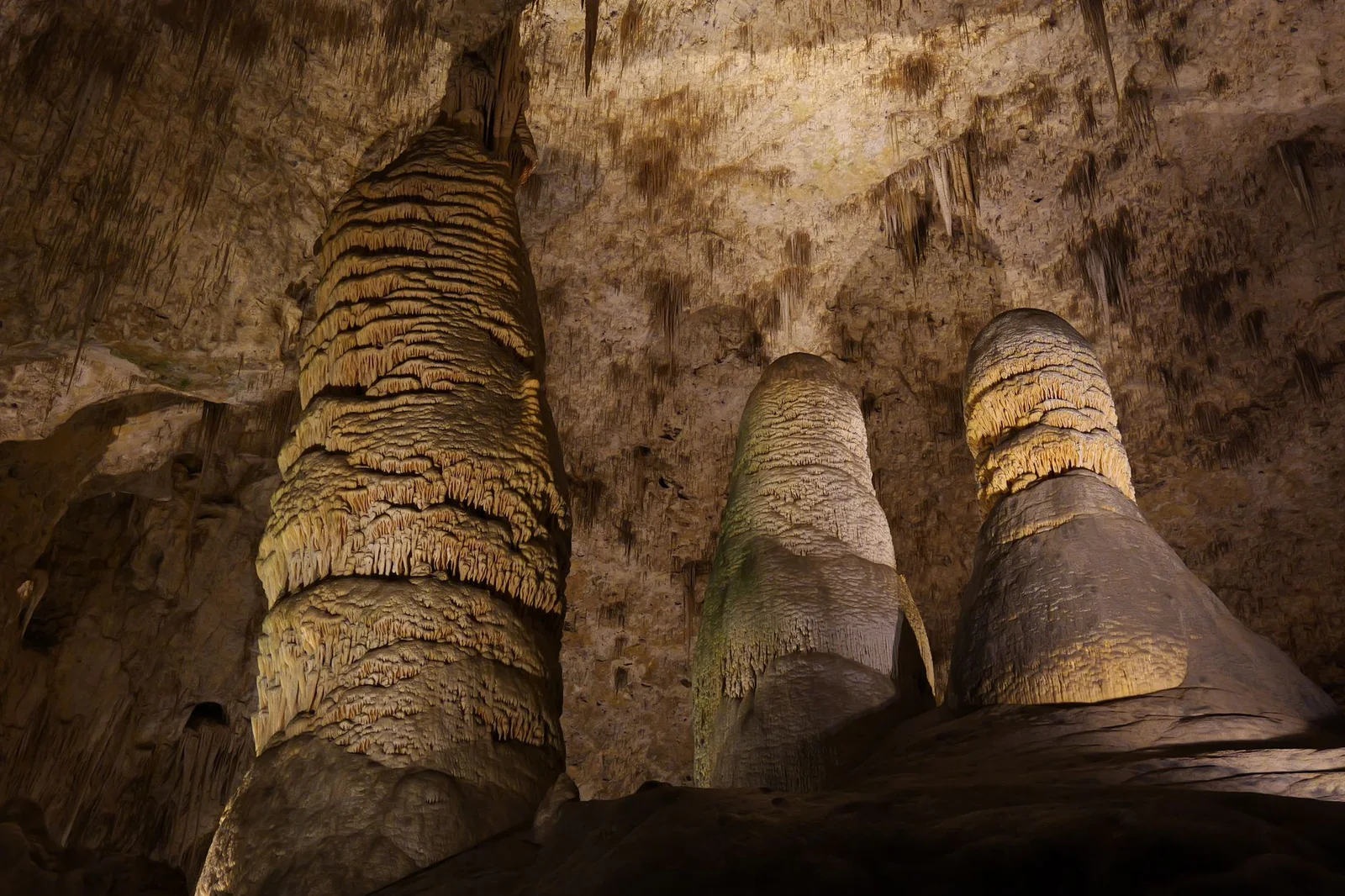
Over countless centuries, those microscopic rings lengthened downward into hanging icicle-shaped stalactites (remember: stalactites cling tight to the ceiling!), while water splashing straight onto cavern floors built rising stalagmites upward from stone below. Whenever ceiling and floor mineral spires finally met across thousands of years, they fused into massive limestone columns still gleaming faintly under damp moisture today. That living drip process explains why guides enforce a strict no-touching rule (check our safety rules): natural skin oils repel water drops permanently, halting calcite crystal layering wherever fingers brush the rock!
How fast do these formations actually grow in arid Caribbean weather? Far slower than visitors assume! Because Curaçao receives modest seasonal rainfall compared to humid mainland rainforests, calcium-rich water trickles through overhead limestone slowly, often adding barely one cubic centimeter across decades. Seeing a meter-tall stalagmite beside the railing means staring directly at thousands of slow rainy seasons preserved in stone.
Keep your eyes peeled as bilingual guides shine spotlights onto playful silhouettes sculpted purely by nature:
- Mother Maria (The Madonna): A striking upright limestone formation resembling a tall, draped veiled figure standing serenely within one central chamber.
- The Sleeping Giant: Broad reclining rock contours stretching horizontally across the upper hall that look uncannily like a resting profile under shadow light.
- Freedom Fountain & Underground Pool: Below dripping overhangs sit still, mineral-rich subterranean water pools reflecting ceiling lights smoothly, quiet oases that once sustained indigenous inhabitants and colonial-era refugees hiding underground (learn that history on our Indian Trail page).
- Pirate & Marine Motifs: Along side alcoves, guides point out whimsical stone shapes resembling sea creatures, coral fans, and weathered carvings shaped purely by ancient ocean currents and mineral drips.
Inside the Bat Chamber: Nocturnal Cactus Pollinators
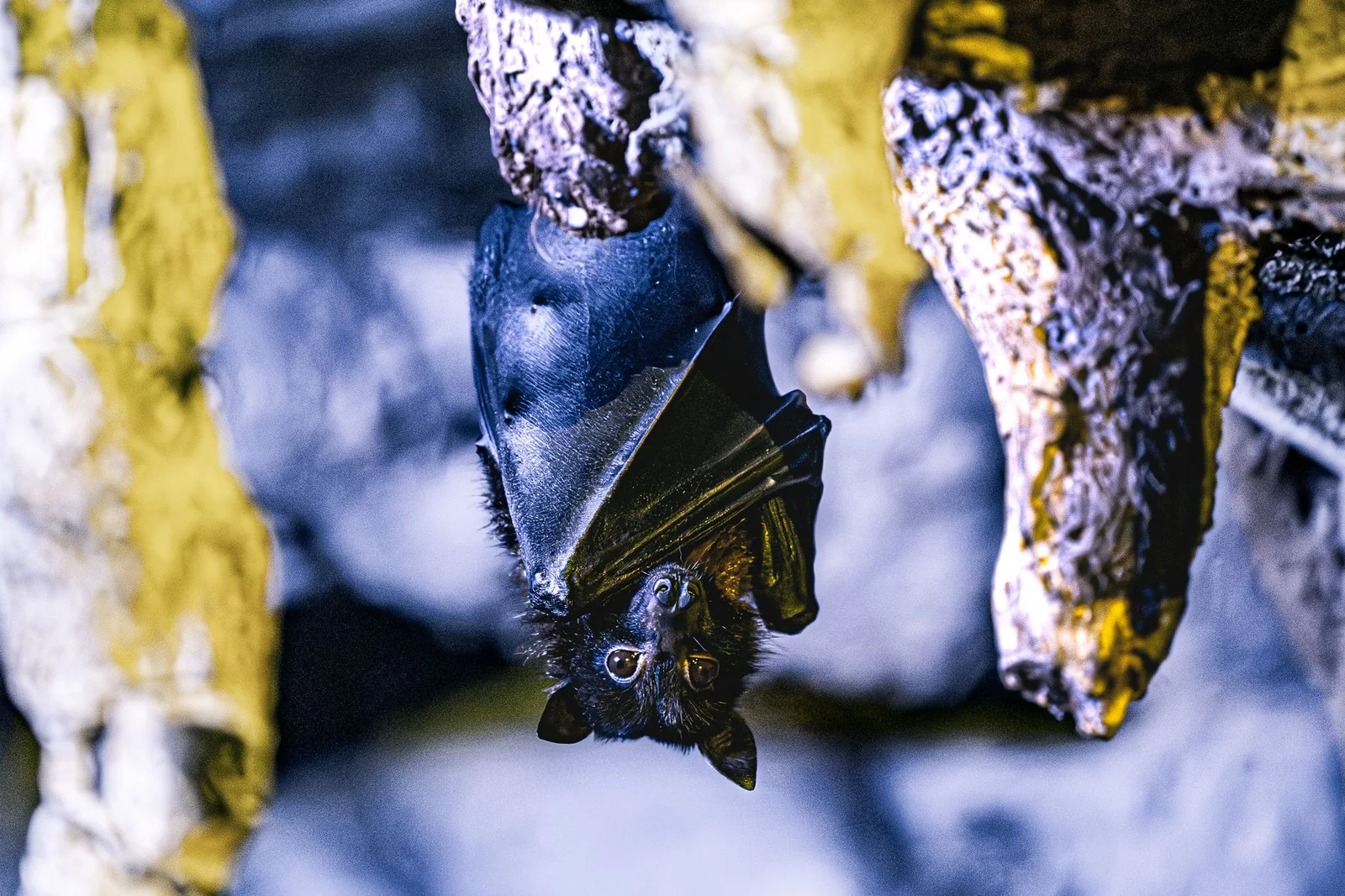
Right around mid-tour, lights dim slightly and voices drop to a respectful hush as groups pause beneath a high, shadowed ceiling hollow. Look carefully straight up! Clustered quietly in dark recessed pockets above the walkway hang dozens of native Caribbean fruit and nectar bats, including long-nosed bats (Leptonycteris) and Pallas’s long-tongued bats (Glossophaga longirostris).
First-time visitors sometimes tense up expecting Hollywood bat swarms diving at hairlines. Nothing could be further from reality! These tiny island bats spend bright daylight hours sleeping soundly upside down miles away from sunlight predators, tucking tiny wings tightly around soft brown bodies while completely ignoring calm human walkers moving quietly ten meters beneath them. Why are Hato’s bats ecologically protected across Curaçao? When darkness falls across the island, they slip quietly out through hidden cliff fissures to feed on nectar from night-blooming kadushi and organ-pipe cacti plus wild island fruit trees. In doing so, these tiny flying pollinators carry vital pollen between desert cacti, keeping Curaçao’s arid scrubland ecosystems alive!
That ecological importance explains why flash photography is banned inside the bat chamber and why guides keep dwell time beneath the roost concise so sleeping mothers and pups experience zero stress. Also watch the floor carefully along that chamber edge: mineral dripwater mixed with subtle natural scents signals where the colony roosts overhead without ever posing sanitation hazards along raised handrails.
Subterranean Microclimate & Acoustic Character
Standing inside Hato’s high main domes feels dramatically different from stepping inside flooded sea grottos like western Curaçao’s Blue Room Cave. Whereas Blauwe Kamer requires open-water swimming through a submerged ocean arch at sea level, Hato remains completely dry underfoot save for occasional damp mineral trickles. Yet warm equatorial temperatures keep cavern air cozy and humid rather than crisp and refrigerated. Strategic wall ventilators pull gentle air currents through broad halls so groups stay comfortable across the 45-to-50-minute loop without freezing wind chill.
Notice how sound changes across each chamber too! When a small 10-person morning group enters at 9:00 AM (compare tour schedules), whispers bounce cleanly off crystalline walls and water drips echo clearly in quiet spaces. When 35 cruise passengers from Otrobanda Mega Pier enter at 11:00 AM alongside noisy tour coaches, ambient heat and chatter rise noticeably. Picking the calm 9:00 AM opening slot or pairing late morning with Sint Willibrordus flamingos and Kokomo Beach lets you soak in Hato’s natural silence far better.
How Guides Light & Protect Living Cavern Walls
One subtle detail makes Hato’s lighting design worth noticing as you walk between rooms. Older show caves worldwide once suffered from bright incandescent floodlights running continuously, which baked algae growth onto pale limestone walls (“lamp flora”). Hato’s modern directional lighting highlights signature shapes selectively during guided tours while keeping dark ceiling sanctuaries shadowed for the bat colony. Always stay strictly behind walkway rails and follow guide beams rather than wandering into unlit side crevices!
Ready to pair geological exploration inside with outdoor cultural heritage right beside reception? Walk straight out toward the Indian Trail described in our history and petroglyphs guide, browse full-day Westpunt loops in our turtles and Kenepa Beach guide, or compare small-group excursions in our verified tour directory.
Traps, Restrictions & Tourist Realities
- Flashing Bright Phone Screens or Strobes Overhead: Even smartphone flashlight torches aimed directly up into ceiling holes disturb sleeping fruit bats; stick strictly to guide flashlights.
- Touching Wet Glistening Stalactites: Mineral surfaces look tempting for quick balance or curiosity photos, yet skin oils halt natural growth forever.
- Skipping the Outdoor Indian Trail Afterward: Half the cultural context of Hato Caves sits outdoors along the paved trail just past the cave exit!